
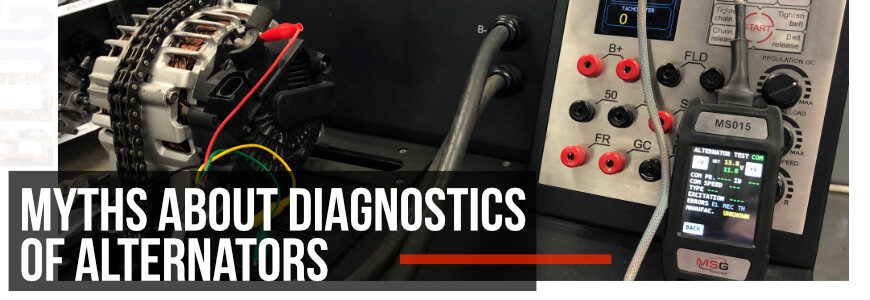
Why DIY alternator tests with a multimeter, a drill and bulb, or an oscilloscope fall short on modern alternators.
The alternator is a hard-working unit that powers all electrical systems and charges the battery; temperature swings, moisture and dust eventually cause failures. The DIY test methods popular online, however, often give too little information for modern alternators.
- Multimeter in the car: the battery smooths voltage fluctuations, making readings misleading, and communication with the ECU cannot be checked.
- Drill and bulb: a lit bulb only shows current is produced, not that output meets specifications.
- Oscilloscope: the most precise of these methods, but not sufficient for every alternator type.
Reliable diagnosis of modern alternators requires dedicated test equipment that measures output parameters and emulates ECU signals.