
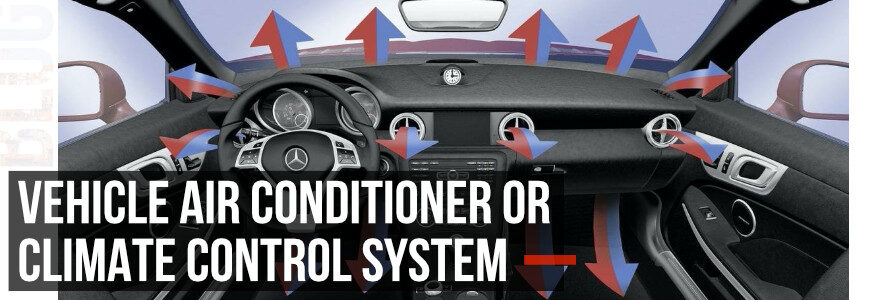
How manual air conditioning and automatic climate control work in cars, the sensors they use and the key differences between them.
Air conditioning and automatic climate control both keep summer journeys comfortable, but they differ in important ways.
Air conditioning cools compressed refrigerant in the condenser and passes it through the evaporator to send cool air into the cabin. It runs with the engine on and is usually adjusted manually by the driver.
Climate control creates and maintains a set temperature and humidity, even different values for different zones. A control unit manages heating, cooling and ventilation using inputs from:
- Outside and inside temperature sensors and a sun sensor
- Outlet air and evaporator temperature sensors
- A system pressure sensor and flap potentiometer
The driver simply sets the target temperature, and the system heats, cools, dries or humidifies the air as needed.